

What is Industrial Wastewater Reuse Technology?
Industrial wastewater reuse technology refers to the advanced treatment of wastewater generated from industrial processes to produce water that can be reused for technical, utility, or production purposes.
Depending on the desired water quality, multiple treatment technologies can be integrated to remove organic contaminants, suspended solids, microorganisms, dissolved salts, and other pollutants.
Today, many companies in the food and beverage, textile, electronics, chemical, and industrial park sectors have implemented water reuse systems to reduce dependence on freshwater sources and optimize operational costs.
Common Industrial Wastewater Reuse Technologies
MBR Technology (Membrane Bioreactor)
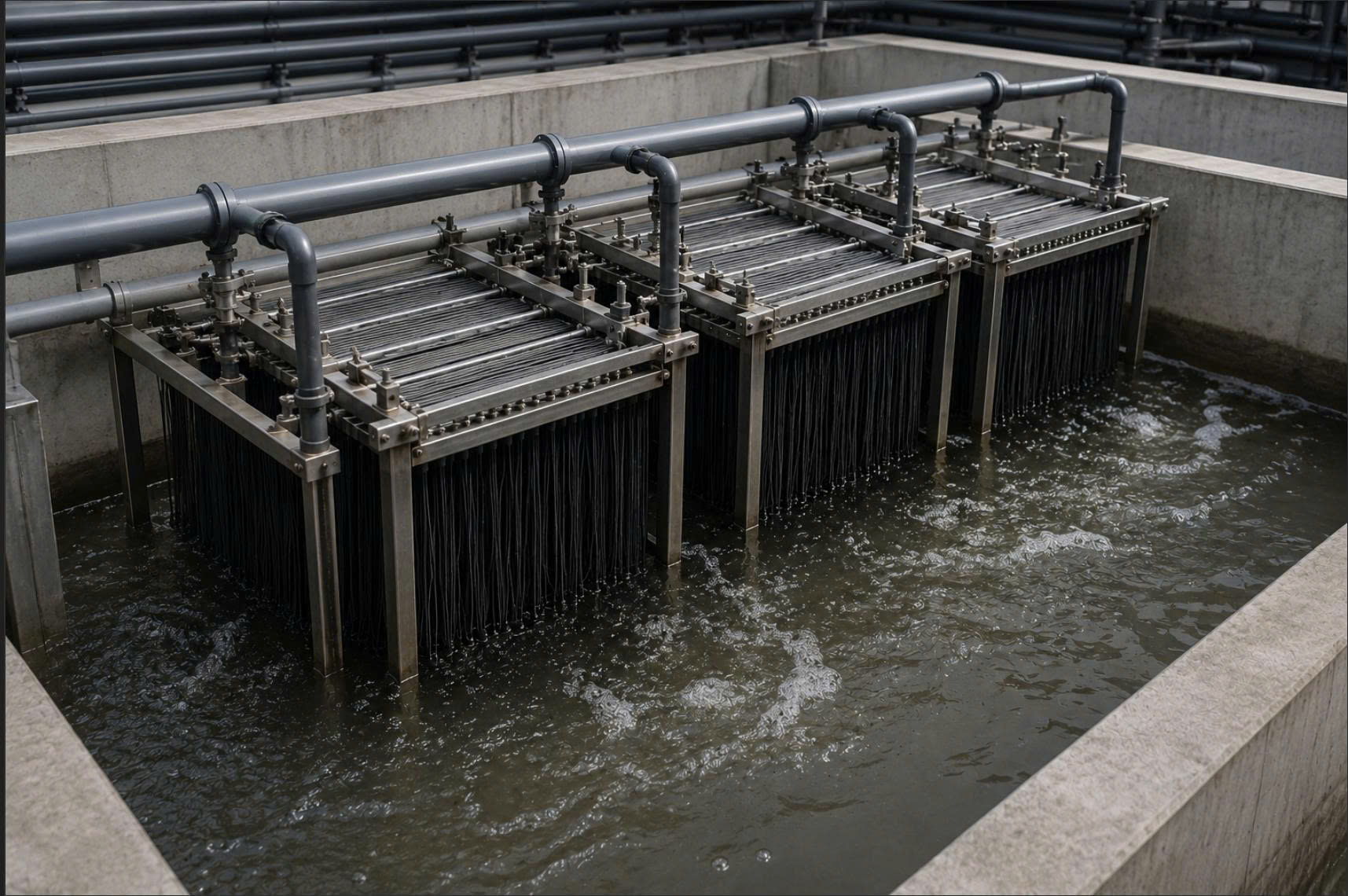
MBR is an advanced treatment technology that combines biological treatment using microorganisms with high-precision membrane filtration.
In an MBR system, organic matter, nitrogen, and phosphorus are biologically degraded before the water passes through the membrane. The MBR membrane effectively retains activated sludge, bacteria, and suspended solids, producing significantly higher-quality effluent compared to conventional biological treatment processes.
Key Benefits